The Coppora Journal
Copper vs Stainless Steel vs Plastic Water Bottles: An Honest Comparison
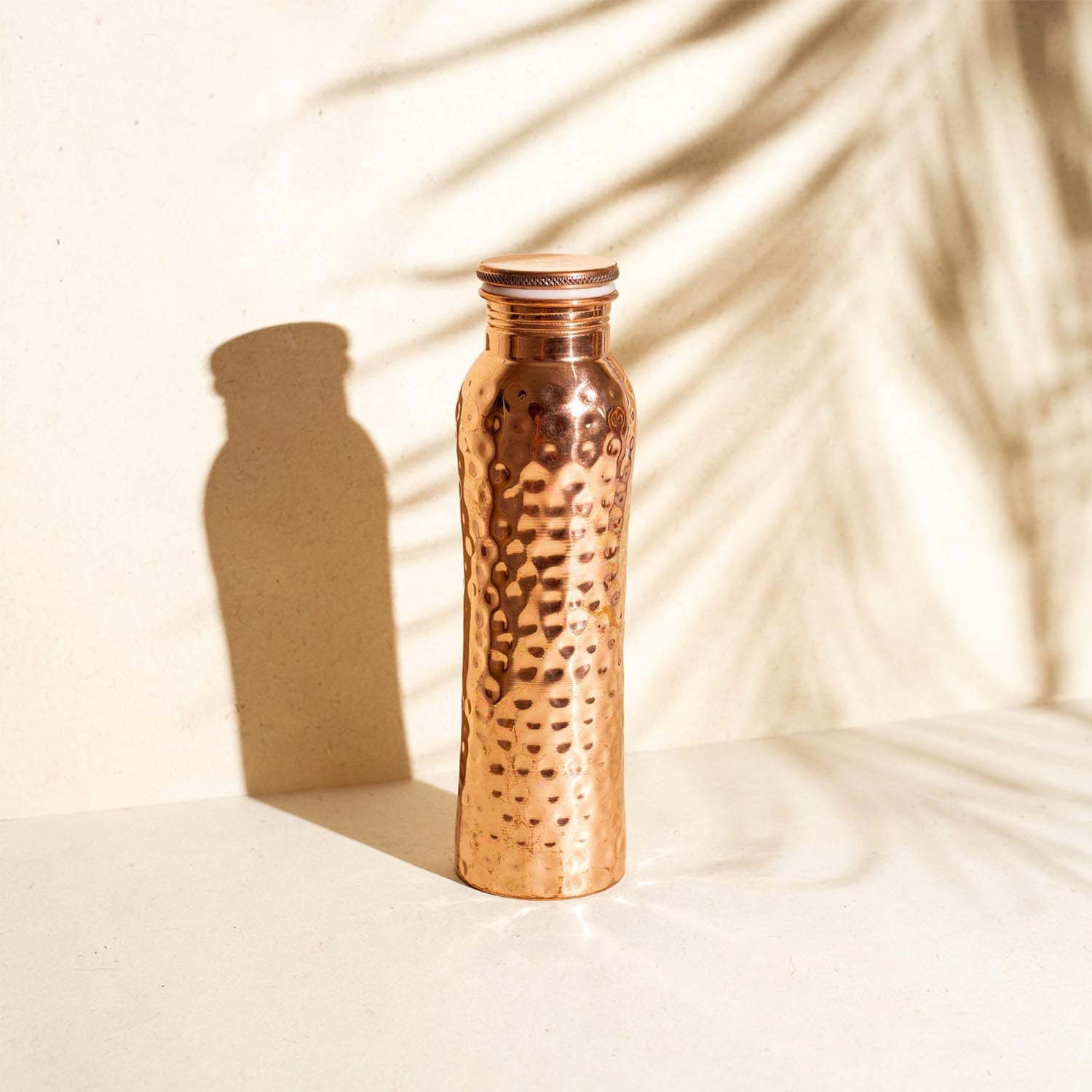
Choosing between copper, stainless steel and plastic comes down to what you want the bottle to do. Stainless steel wins for keeping drinks ice-cold at the gym. Plastic wins on weight and price — and loses almost everywhere else. Copper is the only one of the three that turns still water into a ritual: the traditional tamra jal practice, backed by a real, measurable material property. Here is the honest comparison, including where copper is NOT the right choice.
Real copper. Proven, not promised.
What actually matters when you choose a water bottle?
Four things: what the material does to the water (taste, temperature, chemistry), how long the bottle lasts, what it costs over its life, and whether you will actually enjoy using it every day. That last one is underrated — a bottle you love refilling changes how much water you drink.
How do the three materials compare?
| Copper | Stainless steel | Plastic | |
|---|---|---|---|
| Taste | Subtle mineral note | Neutral | Can leach flavors over time |
| Insulation | No — room temperature | Excellent (vacuum walls) | Poor |
| Antimicrobial surface | Yes — documented property of the metal | No | No |
| Typical lifespan | Decades — solid metal, repairable shine | 5–10 years | 1–2 years |
| Microplastics | None | None | A real concern as bottles age |
| Care | Hand-wash, monthly lemon-salt polish | Dishwasher-safe (usually) | Dishwasher, degrades faster |
| Price | ~$40–90 for solid copper | ~$25–50 | ~$5–20 |
When is stainless steel the better choice?
If your priority is cold water on a hot trail or coffee that stays hot, buy a vacuum-insulated steel bottle — copper does not insulate, and we will not pretend otherwise. Steel is also the practical pick for dishwashers and rough handling.
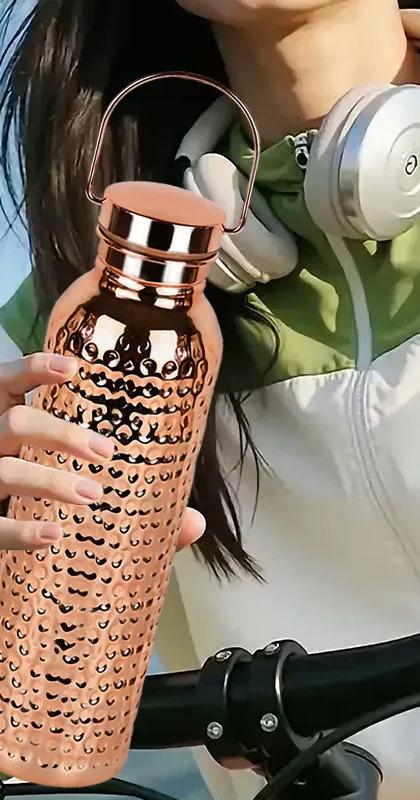
We don’t ask you to trust the word “pure.” We publish the lab certificate, ship you a magnet, and let the metal answer for itself.
Lab-verified 99.9% pure copper · lifetime guarantee
When is plastic ever the right call?
Weight-critical situations: a race vest, a kid's schoolbag. Beyond that, plastic ages badly: scratches harbor residue, older bottles can shed microplastics, and most get replaced within a couple of years — which is why the cheapest bottle is rarely the cheapest over five years.
What makes copper genuinely different?
Copper is the only common bottle material with a documented antimicrobial surface effect — described by botanist Karl Wilhelm von Nägeli in 1893 (the « oligodynamic effect ») and tested on drinking water in peer-reviewed research. In a 2012 study in the Journal of Health, Population and Nutrition, water contaminated with diarrhoeagenic bacteria and stored 16 hours in copper pots showed no recoverable bacteria on culture, while the copper that leached into the water (~177 µg/L) stayed well within the WHO drinking-water guideline of 2 mg/L. The full sources are on our science page.
That property is the foundation of tamra jal — the Ayurvedic practice of storing water overnight in copper and drinking it in the morning. Fill it at night. Drink at sunrise. No apps, no filters, no subscription.
How do you avoid fake copper bottles?
A lot of « copper » bottles online are steel with a copper-colored coating. Run the 5-second magnet test: hold a small magnet to the bottle — solid copper is non-magnetic, so the magnet slides straight off. If it grabs, there is steel under the finish. Every Coppora bottle passes the magnet test and is additionally lab-verified at 99.9% purity, batch by batch.
FAQ
Can I put a copper bottle in the dishwasher?
No. Dishwasher detergents are harsh on bare copper and will dull it quickly. Hand-wash with mild soap and warm water, dry it, and give it a lemon-and-salt polish about once a month. It takes two minutes and restores the full shine.
What should I never store in a copper bottle?
Anything acidic: lemon water, juice, soda, sparkling water, coffee or tea. Acidity pulls far more copper from the metal than plain water does. A copper bottle is for still water only — that is the traditional practice, and the safe one.
How long does a copper bottle actually last?
Decades. It is a single sheet of solid metal with no coating to peel, no seal to fail and no moving parts. Tarnish is cosmetic and polishes away. Coppora backs this with a lifetime guarantee on the bottle plus a 30-day money-back trial.
Is copper-stored water safe to drink every day?
Measured leaching in the 16-hour study above was roughly 177 µg/L — under 10% of the WHO guideline of 2 mg/L for drinking water. Stick to plain water, clean the bottle regularly, and daily use sits comfortably inside that margin.
Frequently asked questions
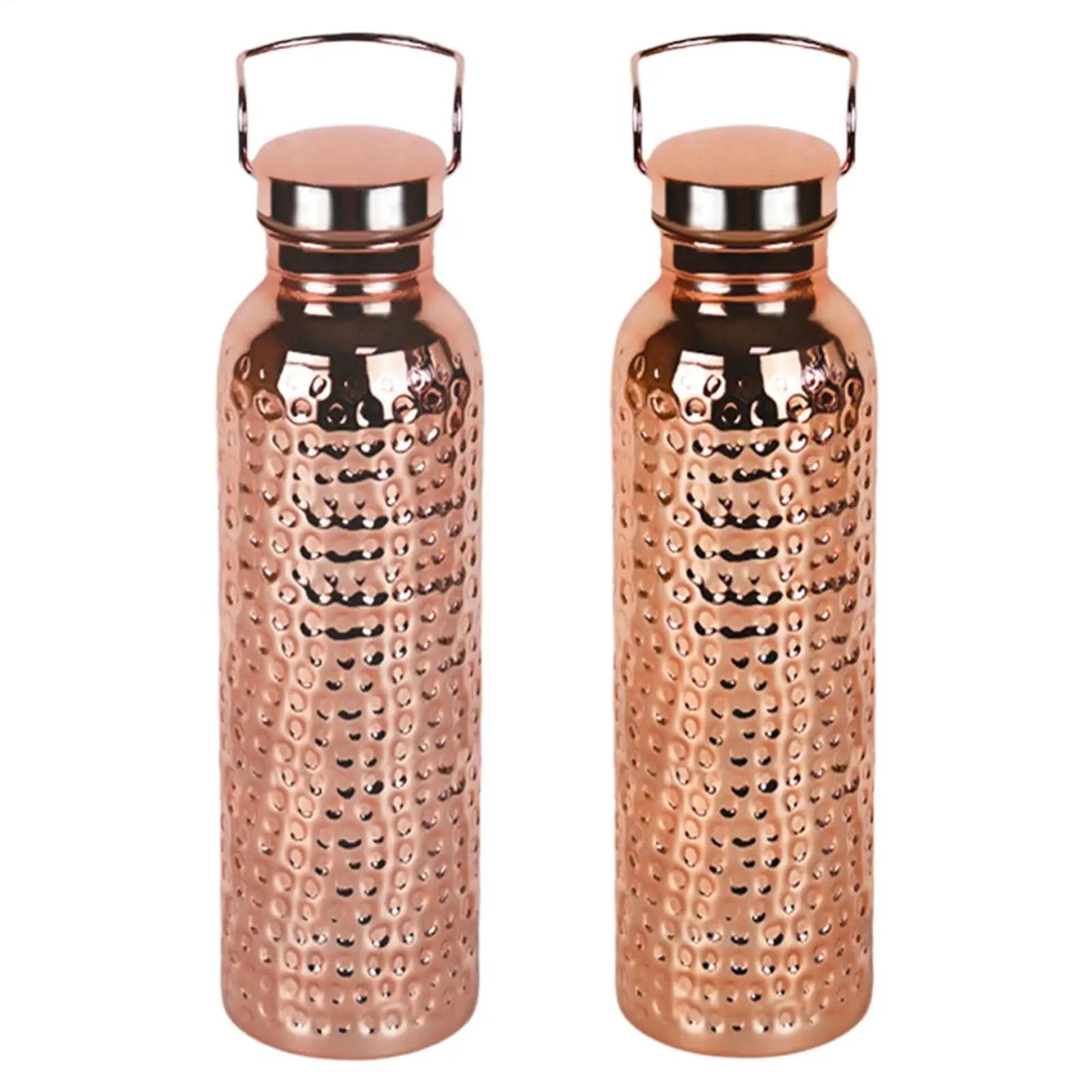
Real copper. Proven, not promised.
See the certificate, then decide.
- Independent 99.9% purity certificate, published on the page
- Passes the magnet test — a free magnet in every box
- Lifetime craftsmanship guarantee · 30-day returns