The Coppora Journal
How to Tell If a Copper Cup Is 100% Pure: 5 Checks Before You Buy
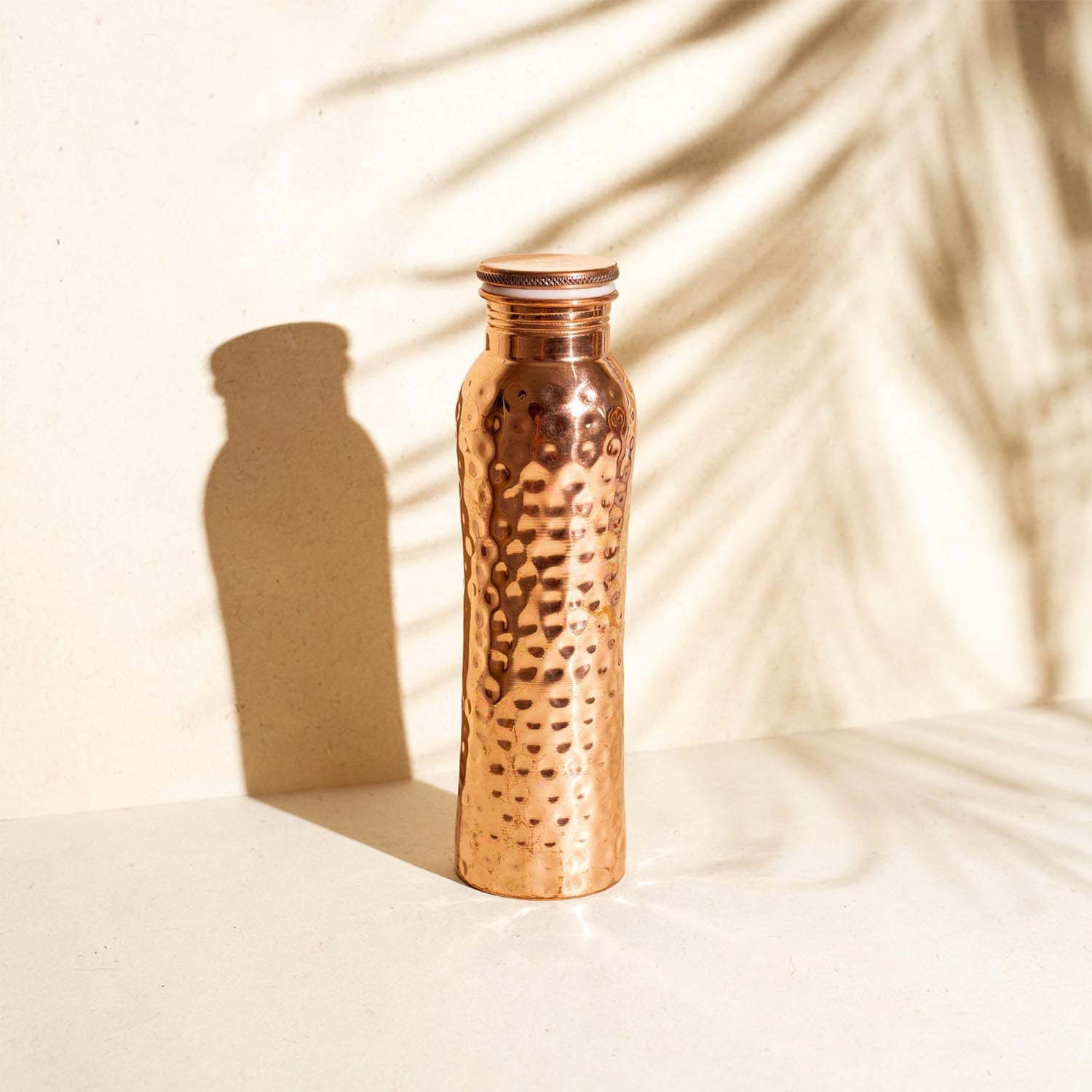
A magnet answers the question in five seconds: solid copper is non-magnetic, so if the magnet sticks, there is steel under the finish. That single test eliminates most of the fakes sold online. The other four checks catch the ones that pass the magnet but still aren't what they claim. None of them require tools you don't already own.
Real copper. Proven, not promised.
Why « 100% pure copper » is worth checking at all
Copper costs more than steel, so a coated steel cup sold at a copper price is a profitable trick — and a common one. Coating also defeats the point: the traditional practice depends on water touching bare copper, and a lacquer or nickel lining puts a barrier in between. You are not being paranoid; you are checking that you got the material you paid for.
Check 1 — The magnet test
Hold any small magnet (a fridge magnet works) against the bottom and the side. Solid copper is non-magnetic: the magnet slides straight off with nothing to grab. If it clings, grabs, or even drags slightly, there is magnetic steel beneath the copper-colored surface.
This is a screen, not a laboratory. Some stainless steels are only weakly magnetic, so a weak pull still means « not solid copper ». A clean slide-off is the pass.
Check 2 — Weight and feel
Copper is dense — noticeably heavier than aluminium, similar to steel but with a different balance. A « copper » cup that feels suspiciously light is usually thin steel or aluminium with a coating. Hold it and a known steel cup of the same size in each hand: the copper one should feel substantial and cool to the touch, warming slowly in your palm.

We don’t ask you to trust the word “pure.” We publish the lab certificate, ship you a magnet, and let the metal answer for itself.
Lab-verified 99.9% pure copper · lifetime guarantee
Check 3 — Look for lacquer or lining
Many mass-market copper cups are lacquered outside (to stop tarnish) and lined inside (usually nickel or tin). A lacquered exterior stays shiny forever and never develops a patina — which sounds like a feature and is actually the tell. Real bare copper darkens over weeks and polishes back with lemon and salt. Look inside under a bright light: a silvery or whitish interior means a lining, not copper.
Check 4 — Seams, base and construction
Turn it over. A quality piece is formed or hammered from solid sheet, with clean joins and no glued-on base plate. A separate, crimped bottom disc is often where cheap cups hide a steel core. Hammering marks should be slightly irregular — genuinely hand-hammered pieces never look machine-perfect, and perfectly uniform « hammering » is usually stamped.
Check 5 — Will the seller prove it?
This is the one that separates brands. Ask a simple question: can you show me a purity test for this batch? A seller with nothing to hide answers with a number and a document. A seller who answers with adjectives — « premium », « authentic », « finest quality » — is telling you they never tested it.
Our position on this is public: every Coppora batch is independently lab-tested and confirmed at 99.9% purity, and every piece passes the magnet test you can run at home. Read the full evidence on our science page.
Which copper piece is right for you?
All three are cut from the same solid copper and pass the same checks — they differ by ritual, not by quality.
| If you want to… | Choose | Price | Why this one |
|---|---|---|---|
| Drink copper water daily, at home or at work | Pure Copper Water Bottle | $74 | Holds 1 litre — a full day of tamra jal in one fill. Rated 4.9/5 across 93 reviews. |
| Serve the whole table, or batch it overnight | Hammered Copper Carafe | $99 | The overnight ritual scaled for a household — fill before bed, pour for everyone in the morning. |
| Share the ritual, or give it as a gift | Copper Cups — Set of 2 | $39 | Two cups for an evening glass of water or a proper Moscow mule. The easiest way to start. |
FAQ
Does a magnet stick to pure copper?
No. Copper is non-magnetic, so a magnet slides straight off a solid copper cup. If a magnet clings or drags, there is magnetic steel under the finish — the piece is coated or plated, not solid copper.
Is a shiny copper cup a good sign?
Usually the opposite. Permanent shine normally means a lacquer coating, which also blocks water from touching bare copper. Real copper tarnishes over weeks and comes back with a two-minute lemon-and-salt polish — that changing surface is the honest signal.
What does « lined » copper mean, and does it matter?
A lining is a layer of another metal — often nickel or tin — on the inside. It stops the water ever touching copper, which defeats the purpose of a copper vessel. Look inside under bright light: a silvery interior means lined.
Can I test purity at home beyond the magnet?
Not precisely. The magnet plus the lacquer and lining checks will catch the majority of fakes, but exact purity requires laboratory analysis — which is why the last check is simply whether the seller will show you the test results.
What should never go in a copper cup?
Anything acidic: citrus, juice, soda, sparkling water, coffee, tea or alcohol left standing. Acid pulls far more copper from the metal than plain water does. Copper drinkware is for still water, and Moscow mules are traditionally drunk fresh, not stored.
Frequently asked questions
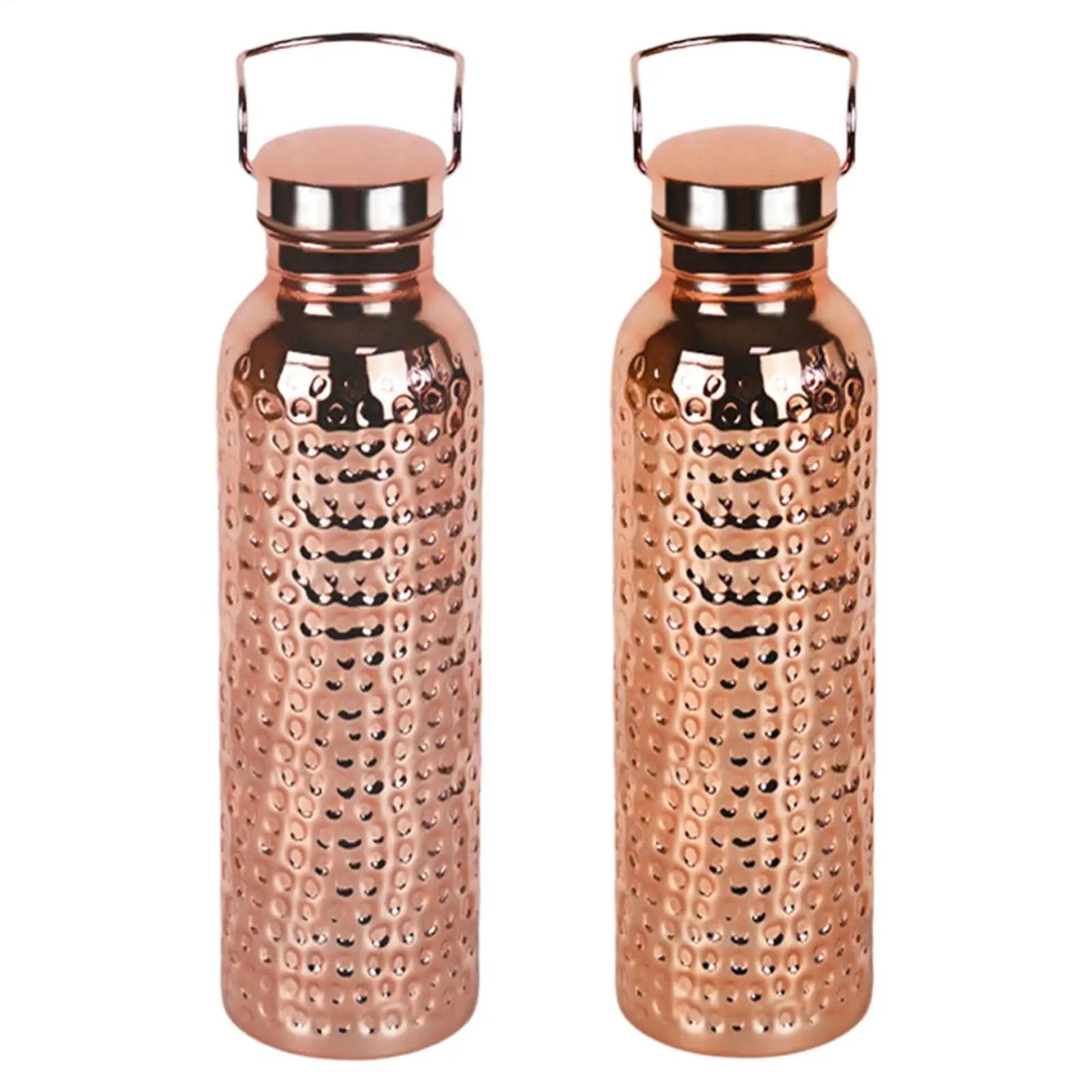
Real copper. Proven, not promised.
See the certificate, then decide.
- Independent 99.9% purity certificate, published on the page
- Passes the magnet test — a free magnet in every box
- Lifetime craftsmanship guarantee · 30-day returns