The Coppora Journal
Is It Safe to Drink From a Copper Bottle Every Day?
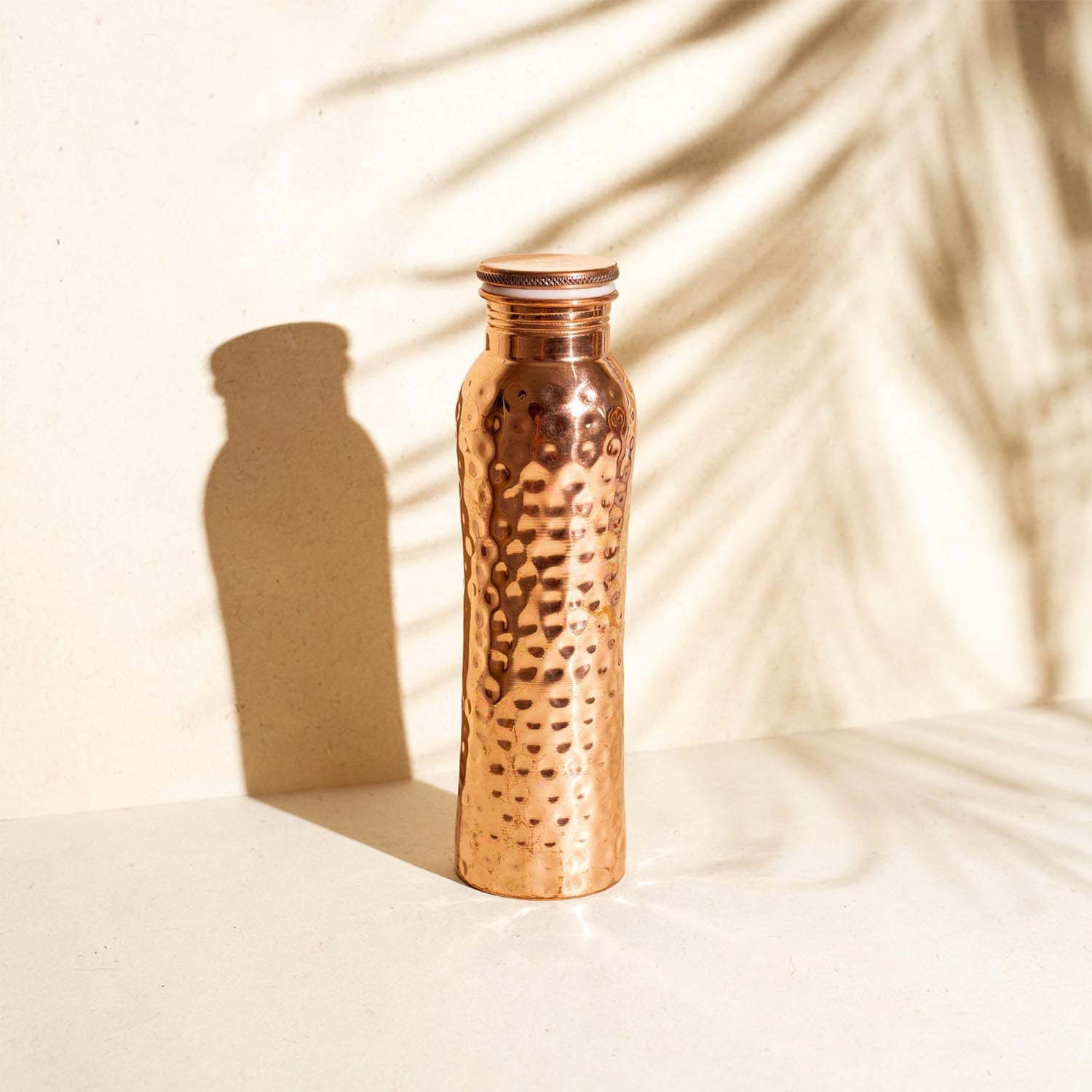
Yes — plain water, stored in solid copper, drunk daily, sits comfortably inside published safety limits. The measured numbers are the reassuring part: in a peer-reviewed study, water stored 16 hours in copper picked up about 177 µg/L of copper, against a World Health Organization drinking-water guideline of 2 mg/L — under a tenth of the limit. The risks that do exist come from two things people get wrong: what they store, and how they clean it.
Real copper. Proven, not promised.
What the measured numbers actually say
The 2012 study in the Journal of Health, Population and Nutrition (Sudha et al.) filled copper pots with water contaminated with diarrhoeagenic bacteria and left them at room temperature for 16 hours. Two results came out of it: no recoverable bacteria on culture, and copper leaching of roughly 177 µg/L. That second number is the one to keep. The WHO guideline value for copper in drinking water is 2 mg/L — so an overnight fill lands around 9% of it.
Copper is also an essential trace mineral: adults need some daily. The concern with copper is not trace exposure, it is large excesses — which is a different situation from a bottle of still water left overnight.
The two things that actually change the numbers
Acidity. This is the real variable. Lemon water, juice, soda, sparkling water, coffee, tea, alcohol — anything acidic pulls dramatically more copper out of the metal than plain water does. A copper vessel is for still, plain water. That is not a brand rule, it is the whole basis of the traditional practice.
Contact time. Overnight (roughly 6–8 hours) is the traditional tamra jal window. Leaving water for days on end is not "more benefit", it is just longer leaching with no upside.
Who should be careful
Anyone with Wilson's disease or another diagnosed copper-metabolism disorder should not use copper vessels at all — their body cannot clear copper normally. If you have liver disease or take supplements that already include copper, that is a conversation with your doctor, not a decision to make from a product page. We are describing a material property and a traditional practice; we make no medical claims and we are not a substitute for medical advice.
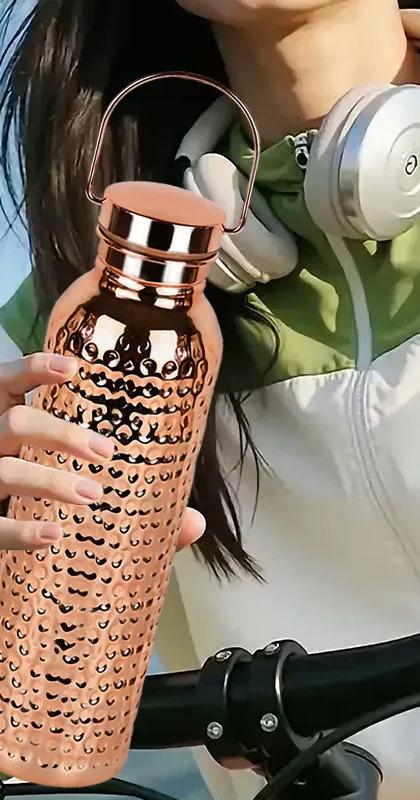
We don’t ask you to trust the word “pure.” We publish the lab certificate, ship you a magnet, and let the metal answer for itself.
Lab-verified 99.9% pure copper · lifetime guarantee
What daily use actually looks like
Fill at night. Drink in the morning. Rinse. Once a month, polish with lemon juice and salt — on the outside and inside surfaces you then rinse thoroughly, which restores bare metal without leaving acid sitting in the vessel. Full routine on our copper care guide.
Two things that are not safety issues but get mistaken for them: the metallic note in the taste (that is copper, and it fades as you get used to it) and the darkening patina (cosmetic oxidation, polishes off).
Which piece for which routine
| Your routine | Choose | Price |
|---|---|---|
| One bottle you refill through the day | Pure Copper Water Bottle | $74 |
| Fill once at night, pour for the household in the morning | Hammered Copper Carafe | $99 |
| An evening glass, or trying the ritual before committing | Copper Cups — Set of 2 | $39 |
All three are solid copper: unlined, unlacquered, non-magnetic, and lab-verified at 99.9% purity batch by batch.
FAQ
How many hours should water sit in a copper bottle?
The traditional practice is overnight — about 6 to 8 hours. The study above used 16 hours and still measured leaching well inside the WHO guideline. Longer than that adds nothing.
Can I drink copper water every single day?
For plain water and normal daily use, the measured exposure stays around 9% of the WHO drinking-water guideline. The exception is a diagnosed copper-metabolism disorder such as Wilson's disease, where copper vessels should be avoided entirely.
Is it safe to put lemon water in a copper bottle?
No. Acidity is the single biggest factor in how much copper ends up in your drink, and lemon is acidic. Use copper for still, plain water only — and drink Moscow mules fresh rather than storing them in the mug.
What are the signs of too much copper?
Nausea, stomach upset or a persistent strong metallic taste are the commonly cited early signs of excessive copper intake. If you notice them, stop and speak to a doctor. With plain water and normal contact times, this is not the expected experience.
Does the green or dark patina mean it is unsafe?
Dark tarnish is normal oxidation and polishes off with lemon and salt. Bright blue-green deposits (verdigris) mean acid has been sitting on the metal — clean it off thoroughly, and review what is being stored in the vessel.
Frequently asked questions
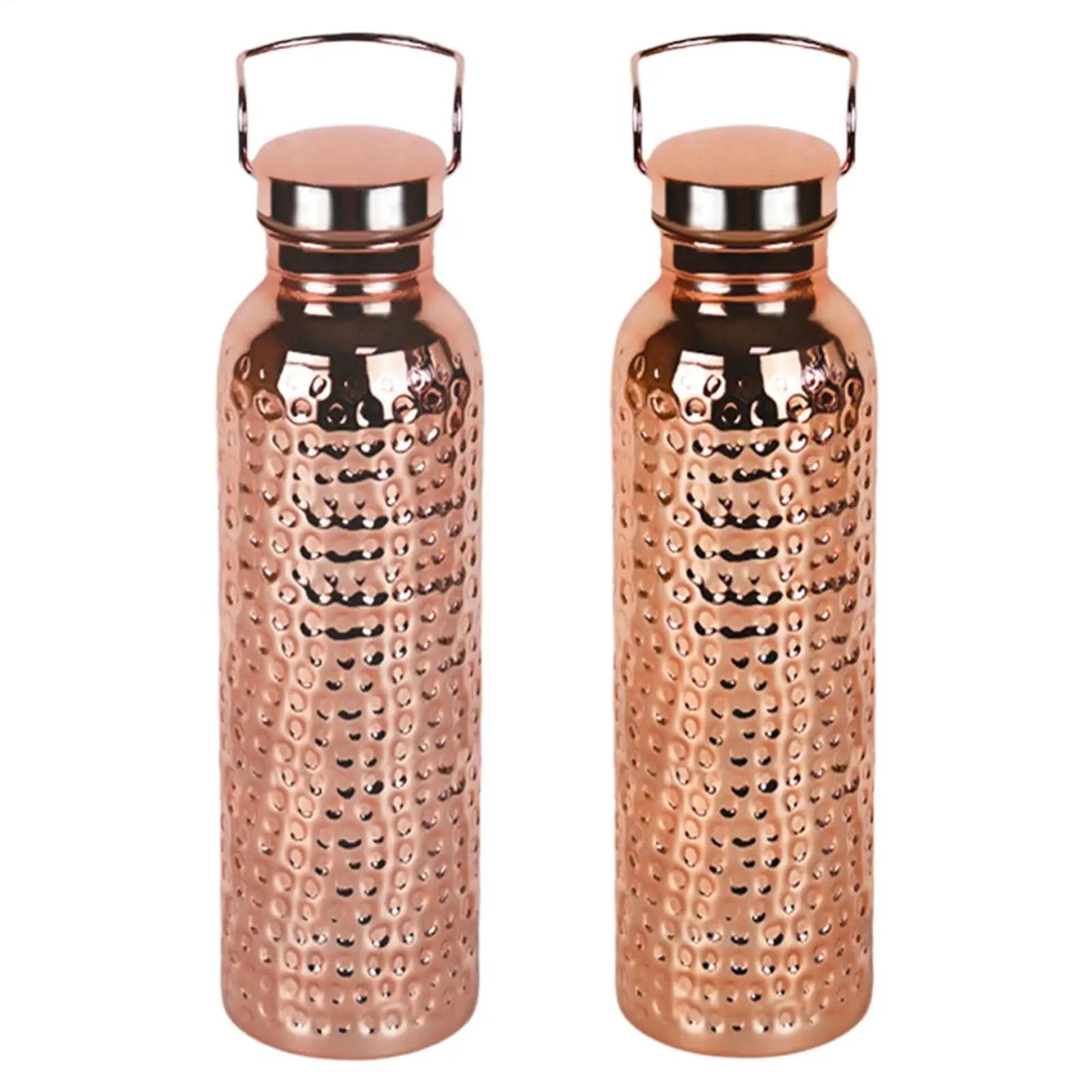
Real copper. Proven, not promised.
See the certificate, then decide.
- Independent 99.9% purity certificate, published on the page
- Passes the magnet test — a free magnet in every box
- Lifetime craftsmanship guarantee · 30-day returns